
THE UKASE (CHARTER) OF 1821 FORMALIZES ENSLAVEMENT OF ALEUTS
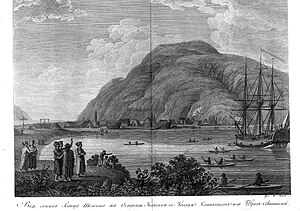
As Russian merchant voyagers expanded across the Aleutian Islands and southern Alaska, they gradually came to use armed force, punishment, and the seizure of hostages to force the Aleut into slave laborers. On Kodiak, merchant Grigory Shelikhov imposed a policy of universal Native service that was formalized in the Russian American Company (RAC) Ukase of 1821. Under its terms, half of the Indigenous male population between ages 18 and 50 could be taken for sea otter hunting (for up to 3 years). In fact, most able-bodied men, women, and children were required to hunt, fish, trap, harvest birds, prepare food, make clothing, or tan skins for company use. This system brought hardship to Alutiiq communities and undermined their subsistence efforts to lay in sufficient food supplies for winter.
Source:  Aron L. Crowell, David R. Yesner, Rita Eagle, Diane K. Hanson, “A Historic Alutiiq Village on the Outer Kenai Coast: Subsistence and Trade in the Early Russian Contact Period,” Alaska Journal of Anthropology vol. 6, no. 1 & 2 (2008).  Retrieved 11/4/2023, akanth-articles_253_v6_n12_Crowell-Yesner-Eagle-Hanson.pdf (alaskaanthropology.org)

Lithograph:  Unknown author, 1802 or before.  From Gavriil Sarychev’s 1802 Atlas. Public Domain.
 Indigenous America Calendar